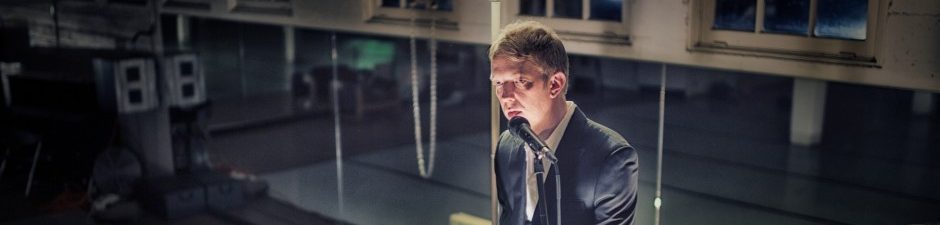
In 2015, I was invited by the Stanford Theatre Laboratory to direct a production of Macbeth on the Stanford Campus. Noemi Berkowitz and Andre Amarotico — both of whom had acted in my production of Cat on a Hit Tin Roof for the Lab two years earlier — were producing the project, and over time we agreed to use Heiner Müller’s adaptation of Shakespeare’s play, in large part because it had been recently translated by Carl Weber, my mentor and former head of Directing at Stanford.
In contrast to many of Müller’s Shakespeare adaptations, Macbeth is quite straightforward, though its vision of the world is decidedly bleaker. He uses the play to explore class exploitation and the barbarism of power, and suggests that it is ultimately unimportant who occupies a throne, because the seat of power itself will always bathe its occupant in the same blood of the oppressed. All of Shakespeare’s key scenes are there — often untampered with — but Müller adds a colloquial verbal energy to some moments, as well as additional scenes, most of which make visible what Shakespeare’s play implies: that the negotiations of legacy and influence happening at the top are possible only because of the corpses piling up at the bottom. In these scenes, almost unspeakable violence is perpetrated against the underclass of servants, soldier, widows and children, all of them seemingly anonymous and exchangeable, as they might be viewed from the perspective of titled aristocracy.
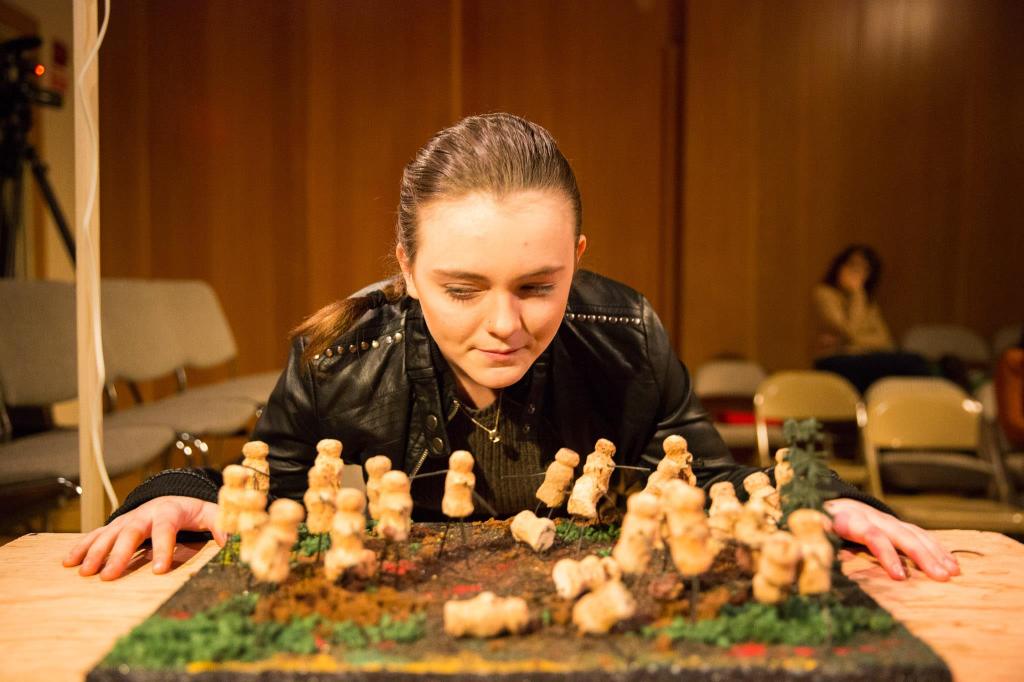
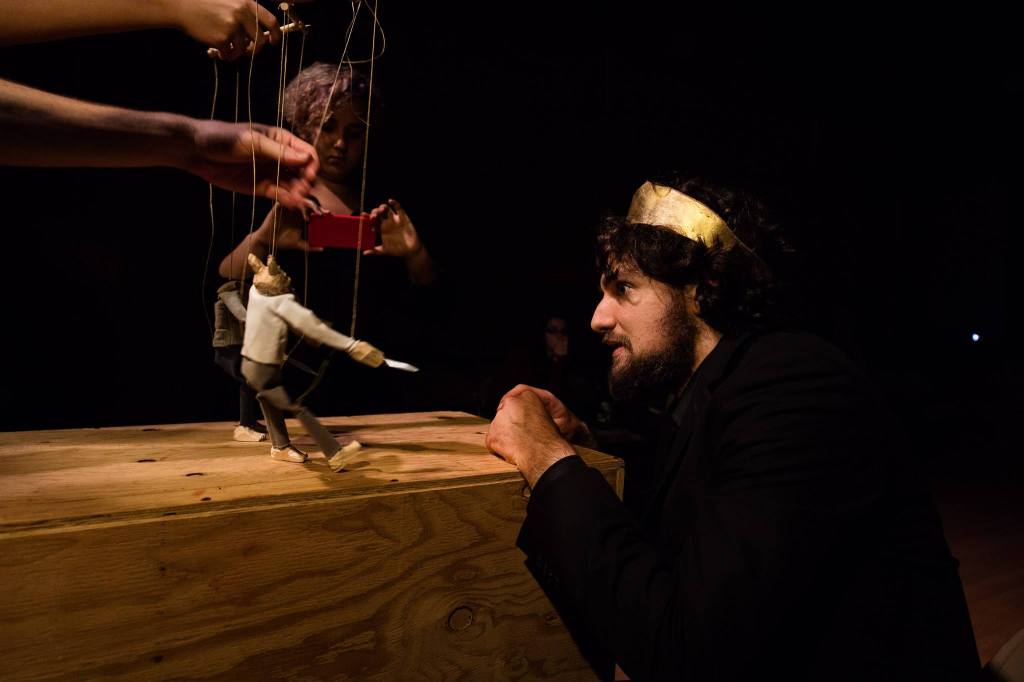
The adaptation presents extreme challenges, in large part because of its addition of these scenes of brutal and bloody violence. I knew I wanted to find an unexpected way to make this violence horrifying by displacing it somewhat from literal representation; I decided to reach out to Niki Ulehla, my longtime collaborator who works with puppets and objects, to find a way to extend the play’s vocabulary into this world of extreme violence without relying on a pile of limp undergraduates covered in stage bloods.
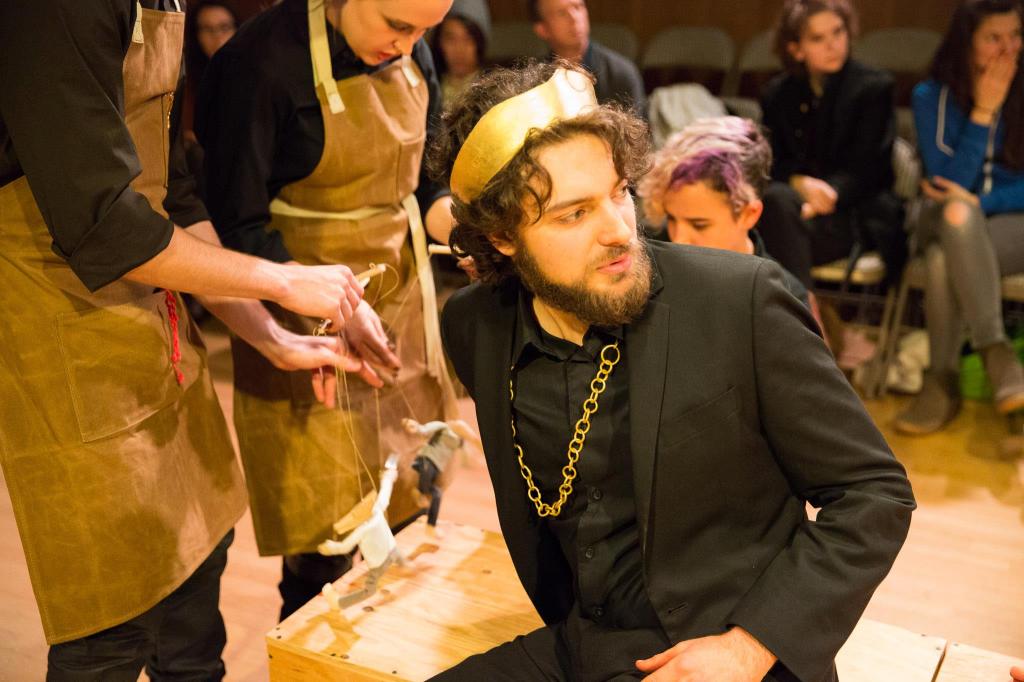
The result was one of the most satisfying productions I’ve ever worked on, conceptually and on the stage. In this staging, the witches became coordinators of a world of objects and small puppets.
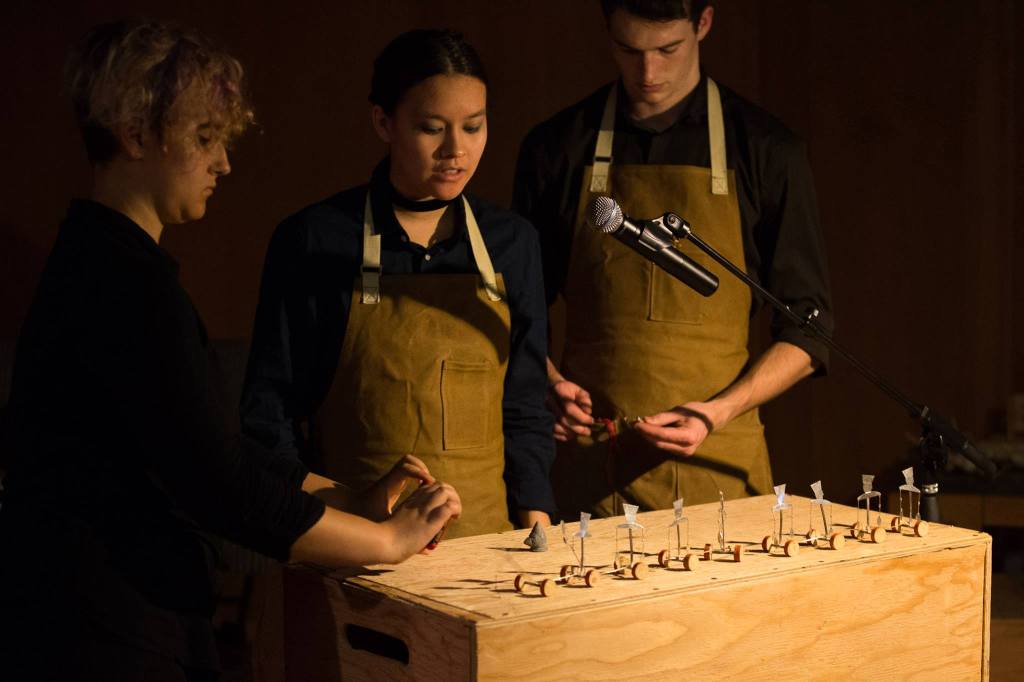
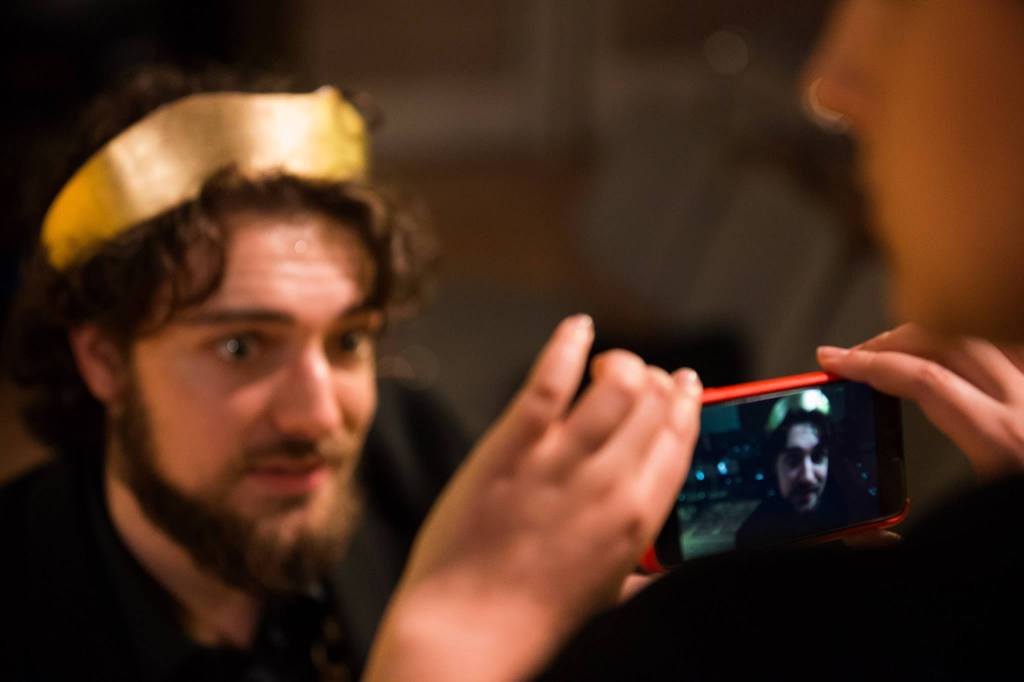
Niki had long been interested in finding ways of bridging between human and object scale, and we employed live video feed from handheld iPhones to create this link.
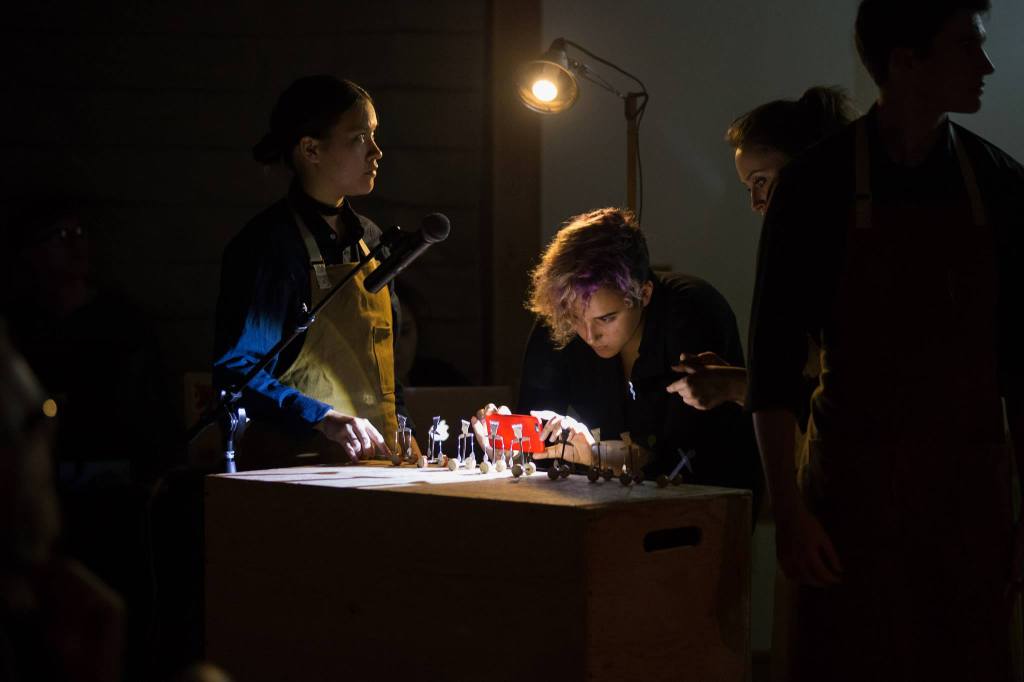
Once we’d opened up this possibility, the imagination of the cast and designers blew open: the thieves hired by Macbeth were played by anteaters and wolves; the fool was a traditional wooden marionette; servants and soldiers were six inch dolls manipulated manually by the witches; and Macbeth’s throne was a pile of stuffed white dummy corpses.

The video feed technology — brilliantly conceived by Michael St. Clair, who had also made my most impractical dreams into reality in Cat on a Hot Tin Roof — allowed us to explore even more corners of creativity, so that Lady Macbeth’s suicide scene, for example, was seen as surveillance camera footage while it was heard coming from a hallway just outside the theatre.
When possible I prefer stage configurations in which the spectators can see each other. This one was a long, narrow playing space with audience on three sides, and several stations distributed around the space from which the drama of small puppets and objects could be projected.
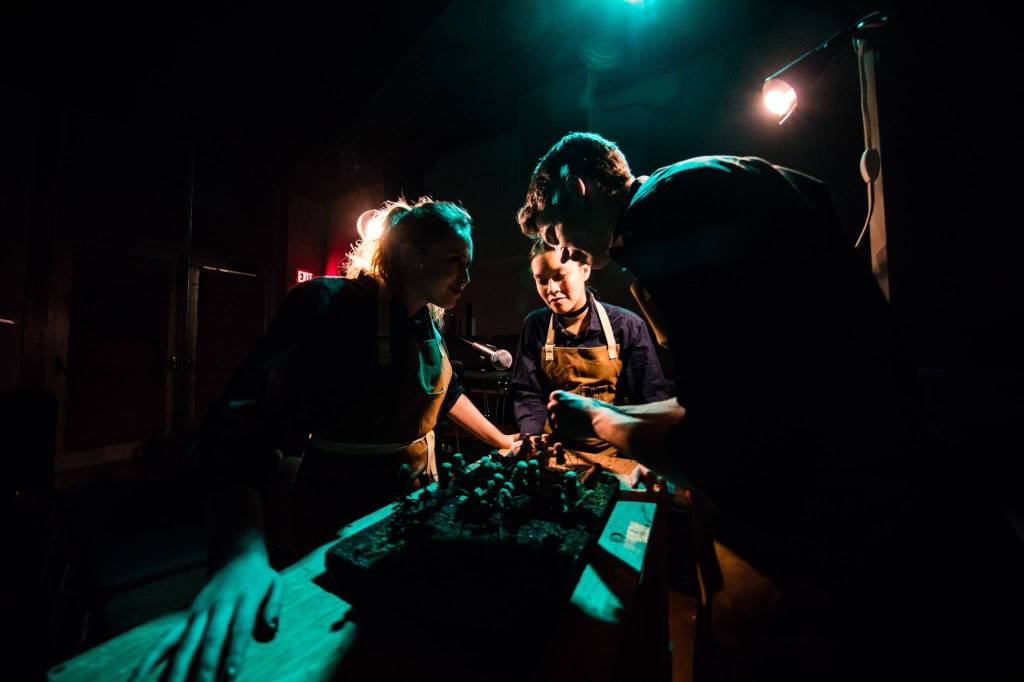
“A uniquely configured thrust stage is the first of the many surprises presented during Stanford Theater Laboratory’s production of “Macbeth.” Under the ambitious direction of Michael Hunter, the thirteen-person ensemble transforms one of Shakespeare’s most famous play into a non-traditional, visually stimulating performance.” The Stanford Daily
 Michael Hunter